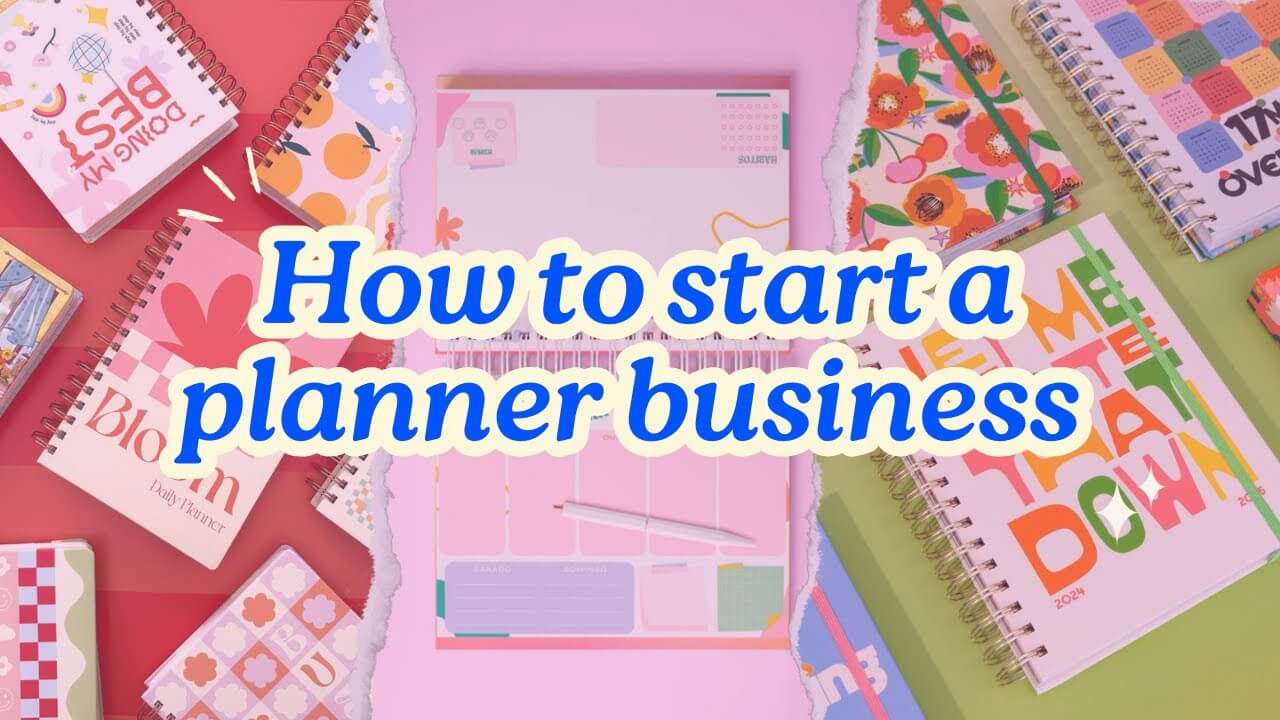
Let’s talk about planners and journals—the tools
that help us stay sane in this chaotic world. With remote work, side hustles, and an
overwhelming to-do list, more people than ever are looking for ways to get their
lives in order. That’s where planners come in. Today, we’re breaking down how to start
your own planner and journal business. If you want to sell physical planners,
digital ones, or both, I’ve got you covered. Let’s get into it. First off, why planners? Simple—they’re in demand. People want tools to manage their
time, set goals, and stay productive. Think about it—fitness planners, wedding planners, academic planners,
even digital ones for tablet lovers. You’re not just selling paper; you’re selling
clarity, structure, and a bit of sanity. And the best part? The market for planners
and journals is incredibly diverse. Some people love structured daily
planners with time-blocking features, while others prefer free-flowing bullet journals
where they can write and sketch however they want. Some love a simple minimalist design, while
others want something colorful and decorative. No matter what niche you choose, there are buyers out there looking
for exactly what you have to offer.
The first step is choosing your niche. This
is crucial. Don’t try to please everyone; focus on solving a specific problem
for a specific group of people. Here are a few examples: Fitness enthusiasts who need
to track workouts and meals. Students juggling assignments and exams. Entrepreneurs managing their goals and budgets. Brides and event planners organizing the big day. The more focused you are, the easier
it is to attract the right audience.
But how do you find the right niche for you? Start by thinking about your interests and
expertise. If you’re passionate about fitness, creating a workout planner could be
a great choice. If you’re a student, you already understand what features
make a study planner useful. Research online to see what kinds of planners
are trending, check out best-sellers on Etsy and Amazon, and even ask people in your target
audience what they wish existed in a planner. Remember, a well-defined niche means
you’re not competing with every planner out there—you’re offering something uniquely
valuable to a specific group of people. Once you’ve nailed down your niche, it’s time to design your planner.
This
is where creativity meets practicality. For physical planners, start by deciding on
the layout that best fits your audience's needs. Choose between daily for detailed
scheduling, weekly for an overview, or monthly for long-term planning. You can
also combine them for added flexibility. Next, think about the type of cover you’ll offer.
Softcover planners are lightweight and flexible, making them easy to carry around, while hardcover
options provide durability and a premium feel. Planner sizes are often standardized
but vary between European and American styles. European planners use A, B, and C series. These share the same shape but differ in size,
with smaller numbers indicating larger paper. American sizes are more flexible, with
popular options including Letter, Legal, Half-Letter, Junior Legal, and Pocket-sized. Your choice depends on practicality:
Pocket-sized is ultra-portable and sometimes has as little as 50 pages, while Half-Letter
is a versatile, go-to option for most needs.
When it comes to binding,
you have several options. Staple binding is simple and
economical, ideal for thin planners. Spiral ring binding allows pages to turn
smoothly and lie flat, making it user-friendly. Stitched binding offers a classic, durable look,
and glue binding gives a sleek, polished finish. And don’t forget to think about extras that
can make your planner stand out. Include habit trackers, goal-setting pages, or even stickers to
add value and make your product more appealing. For digital planners, focus on usability.
Make it interactive, customizable, and compatible across devices. Canva and
other design tools can be lifesavers here, or hire a freelance designer
if this isn’t your strong suit. Now, how do you bring your design to
life? You’ve got a couple of options. For physical planners: Print-on-demand services like Printful let you avoid bulk inventory but come
with higher per-unit costs.
Bulk production through manufacturers requires
a higher upfront investment but offers lower per-unit costs, making it more cost-effective
in the long run if you're confident in demand. If you’re going the bulk production route, look for manufacturers that
specialize in planner printing. Alibaba is a great place to
find suppliers worldwide, offering a range of customization options.
Be sure to order samples first to ensure the quality meets your expectations
before committing to a large order. For digital planners, it’s simpler—you’ll
need to create downloadable files, like PDFs, or even use platforms that allow you to build your own planner with no coding
experience, like Notion or Goodnotes. Your brand is what makes people
pick your planner over someone else’s. Start by creating a name, logo,
and color scheme that fit your style. Next, set up your online presence: Build a website using platforms
like Shopify or open an Etsy store. And don’t forget social media.
Platforms
like Instagram and Pinterest are visual, making them perfect for attracting planner lovers. And here's a tip: Share content
that helps your audience. Post planning tips, productivity
hacks, or behind-the-scenes looks at your design process. It builds
trust and keeps people coming back. Here’s where it gets real, marketing. Getting your product in front of people
is just as important as creating it. Leverage social media ads,
partner with influencers, or offer freebies like printable
planner pages to grow your email list. And don’t underestimate the
power of word-of-mouth—happy customers are your best promoters. Also, consider joining planner-focused Facebook
groups and Reddit communities. Engaging in these spaces can help you understand your
audience better and even generate early sales. Once you start making sales, it’s time to
think about scaling. Consider expanding your product line with different planner themes, add
accessories like planner stickers and bookmarks, or create a membership-based subscription
for exclusive planner templates.
You can also explore wholesale
opportunities, selling to bookstores, boutique shops, or corporate clients who
need branded planners for their employees. So, that’s the breakdown of starting
a planner and journal business. It’s not just about creating a product—it’s about
helping people take control of their lives. If you’re ready to start, focus on your
niche, design something people will love, and build a brand that stands out. And
remember, every big business started small. Thanks for watching, and let me know in the
comments what kind of planner you’d create. Don’t forget to like, subscribe,
and share this video with someone who needs a little entrepreneurial inspiration..